
Image By Silver Oak Online Casinos
Tag Archives: Android
Twitter for Android upgrades in v2 [video]
Android 3.0 Preview [video]
Next generation of Android phones to replace credit cards [video]
Watch live streaming video from web20tv at livestream.com
Opera Mobile for Android demo on Samsung Galaxy S [video] now with pinch to zoom
Which smartphone works for you?
Interest In The iPhone Crashes. Interest In Android Soars [CHART]
Android has successfully destroyed Apple’s dominance of consumer mindshare in the smartphone world, according to a new survey from ChangeWave Research about smartphone preferences.
ChangeWave found only 38% of the people it interviewed want iOS on their next smartphone. That’s down 12 points from June when 50% of the people it surveyed said they wanted an iPhone.
Meanwhile, 37% of respondents say they want an Android based phone.
To be sure, the crash in iPhone interest is in part due to the fact that iPhone 4 had just launched in June. That makes for a tough comparison, becuase excitement over the iPhone was at its peak.
Still, this is the closest Android and iPhone interest has ever been in a ChangeWave study.

Rightmove launches mobile site to cater for Android users | Econsultancy
Having already launched apps for iPhone and iPad, property search website Rightmove has moved to cover other devices with a new mobile website.
The new site is built in HTML5, and replicates the GPS and mapping features of the app, and extends Rightmove’s reach to the rest of the 13m smartphone users in the UK.
Anecdotal evidence, as well as that from research firms, is that Android is gaining mobile market share rapidly, thanks to having multiple devices on the market at a range of prices that Apple cannot match.
For brands, this means that launching a mobile presence through iPhone apps alone is no longer an option if they want to gain maximum exposure. With a number of app platforms to cater for, a mobile website is the easiest way to appeal to as many mobile users as possible.
According to Stephen Mellish of 2ergo, which developed the mobile site for Rightmove:
“With the increasing reach of operating systems such as Android and the ever growing number of alternative options, mobile sites create a more inclusive way to target users. HTML5 is also allowing brands to replicate the feel of an ‘app’ through an mobile site which is increasing its appeal to marketers.”
I reviewed the Rightmove iPhone app last year, and it is a very useful and feature rich app, and the mobile site is equally impressive. As Stephen Mellish says, it manages to recreate the feel of an app and, having tried both site and app, it’s hard to find any major differences.
This doesn’t mean that brands shouldn’t develop iPhone apps though. While Android is growing fast, the iPhone still accounts for the majority of mobile internet usage, and most firms will see the majority of their mobile traffic coming from Apple devices.
This is certainly the case with Rightmove. While 12% of visits to Rightmove from mobile devices are from Android phones, and 8% from Blackberries, the iPhone still accounts for 52%, and the iPad 12%.
Also, exposure for brands via the App Store can be valuable for building awareness of brands’ mobile presence. Rightmove’s iPhone app has been a success so far, having had 800,000 downloads over the past year, and it currently drives more than 1,000 leads per day to estate agents.
When I looked at the pros and cons of mobile sites and apps earlier this year, one of the biggest arguments for the app was greater functionality for users offered by apps; features such as finding a user’s location via GPS, and barcode scanners.
However, if these functions can be replicated on mobile websites, if the handset allows, then the argument for developing a mobile website rather than an app becomes even more convincing.

via econsultancy.com
TweetDeck Arrives on Android
Starting this Thursday, popular social media management tool TweetDeck will be available as an Android app. The company is opening its beta program in the morning, and we were lucky enough to get our hands on a copy tonight.
We’ve tried other Android apps that have promised varying degrees of functionality and features for social media work and play; we’ve experienced varying degrees of satisfaction so far with all of them.
The TweetDeck app for Android is still “very beta,” a.k.a. lacking the polish you’d expect from a completely finished application. We tried playing around with it a bit tonight; while we’ll be delighted when more mature builds are available, we still think the app has breathtaking potential.
It integrates Facebook, Twitter, Buzz and Foursquare accounts into a single application. Updates are color-coded and presented in a single, blended column. There’s also a “Me” column for reviewing all your Twitter @replies and comments and like for your Facebook posts.
To give you an idea of what the app will look like, here are the signin and Home screens:
And here’s what a Foursquare venue screen and Twitter profile page look like:
Overall, the UI is clean and optimized for mobile displays — and the way updates are pulled is easier on battery life than having a constantly running, real-time stream of data.
And we’ve got to hand it to the developers and designers at TweetDeck for giving Android users even more fun and useful features than are currently available on the iPhone version of TweetDeck, which doesn’t yet support Foursquare or Buzz. But this Android app is a clear signal of where the company’s Apple-focused applications will be headed.
In future iterations of the app, TweetDeck hopes to add improved map performance, better handling for multiple Twitter accounts, video upload capabilities and better integration with Android hardware.
Check the company’s website in a few more hours for details on how you can be part of its Android beta program, and definitely let us know what you think of the app in the comments.


via mashable.com
Google and Apple prepare for mobile advertising battle | Media | The Guardian
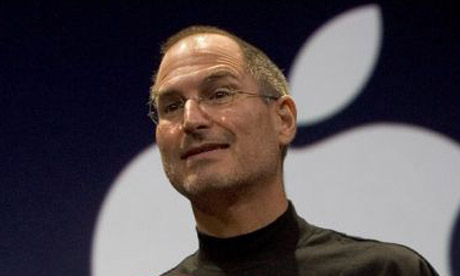
In early June, Steve Jobs demonstrated iAds in front of Apple developers in San Francisco. Photograph: David Paul Morris/Getty Images
British mobile users will soon find themselves embroiled in the epic confrontation taking shape between Apple and Google. iAds, Apple’s bid to run advertisements inside apps, is expected to make its UK debut in September. Separately, Google has adopted what its chief executive, Eric Schmidt, calls a “mobile first” approach, prioritising investment in a medium that has become “fundamental to everything we do”.
With the iPhone moving into mass market territory and the iPad selling 200,000 units a week, Apple’s decision to start selling mobile advertising seems likely to concentrate a few media minds.
In early June, Steve Jobs demonstrated iAds in front of Apple developers in San Francisco. The ad he showed off was a work-in-progress by Nissan. The demo, which included a 15-second video, an interactive application and a form to sign up for a competition, didn’t quite live up to Jobs’s aim of “trying to combine the emotion of video with the interactivity of the web”. But it was slick. In the future, Jobs promised, iAds would bring in the revenue that would allow developers to continue producing “free and low-cost apps to delight users”.
There are early signs that mobile advertising, like everything else touched by Cupertino’s genius, will turn to gold. During the eight weeks leading up to the presentation in San Francisco, Apple sold $60m-worth of iAds to the likes of Unilever and Disney. This compares with the $250m mobile online display revenue generated across the whole of 2009 in the US.
For media owners, there are two major problems with Apple’s ad model, which the analyst Toni Sacconaghi of Bernstein Research suggested in a recent report has the potential to become an $800m-a-year business within the next year.
First, Apple’s approach threatens to reduce media owners to the status of “developers” alongside tens of thousands of competitors. The second problem is that Apple’s business model, like Google’s, reduces media owners’ involvement in advertising markets to a minimum.
Mobile giants
Apple and Google already own the world’s two largest mobile ad networks. Both are already selling ads directly to advertisers. Advertisers, for their part, aren’t paying to reach mobile users attracted by a specific media company. Instead, in the case of iAds, they pay Apple to reach broad swaths of iPhone and iPad users who share common demographic characteristics.
In order to stitch together these communities of users, Apple has been analysing the purchasing history of its 150 million iTunes account holders worldwide who also use iPhones and iPads. Its own hardware produces a separate stream of data about what users do, and where and how they do it. Notably, the privacy policy associated with the iPhone 4 allows Apple, for the first time, to collect anonymised real-time location data on its users.
How much of this data will Apple share with advertisers and publishers? “We talk to Apple a lot,” says one publisher. “But we haven’t had that conversation yet.” The ad industry seems similarly uncertain. Michael Collins, the chief executive of Joule, a WPP-owned mobile agency, recently told Business Week that data sharing is “the question that many of us in the industry are very curious about“.
Google, too, is forging ahead, but in a different way. On the mobile web, it continues to emphasise lead generation rather than branding. Ian Carrington, director of mobile ad sales for Google Europe, Middle East and Africa, sketches out a scenario in which a mobile user is reading a book review on a handset in a cafe. “The accompanying ad will understand its context,” he says. “It will know what book is being discussed in that review. He adds: “You’ve also got GPS in most smartphones now, so your handset can tell you that this book is £5.99 in a shop 100 yards away, and £4.99 in a shop a mile away.”
Google, Carrington says, already knows how to do “the contextual part” of a scenario like this. “We’re still working on the location-based bit,” he adds. Yet the bottom line is that Google’s results-based approach will probably yield small revenues on the mobile web, just as it did on the desktop web.
Despite different approaches to advertising, one thing unites Apple and Google. Both companies want to hold on to a relatively large proportion of the ad revenue they generate. Apple, for example, proposes to pass on to developers 60% of the revenue generated by iAds. Google continues to suggest it passes on to publishers “at least 50%” of the revenue generated by ads it runs next to publishers’ content. These levels of commission will look high to anyone who recalls the 15% commission that used to go to media agencies for bringing in advertising for publishers.
There’s a further reason for publishers to be wary about the mobile web. As it turns out, Apple and Google plan to take a large slice of what, by anyone’s standards, is a very small pie. Last year, the latest in a series of years dubbed the “year of mobile advertising” by industry boosters, advertisers spent a mere £35m trying to reach British mobile users, according to Enders Analysis. That’s 1% of what advertisers spent on all digital advertising and, as Benedict Evans, a consultant at Enders Analysis, points out, less than the £50m he estimates Britons shelled out last year to have pornographic images texted to their handsets.
In the words of one publisher, the cumulative effect of these challenges is a “cautious” and “risk-averse” approach to publishing on tablets and handsets.
Others take a more positive view: Matt Kelly, digital content director at Trinity Mirror‘s national papers, says Apple has the upper hand “because they’re first into the market, they’ve done all of the development, all of the creative hard work”. “They’re reaping that reward,” he adds. “At the moment, content producers are at the mercy of great technology innovators. But it won’t stay that way forever. We may see a swing towards publishing content on Android if Google’s business terms become more attractive.”
Not a bad deal
Kelly is also wary of the argument that Apple and Google are skimming off too much mobile ad revenue. “The overheads at Trinity Mirror’s newspapers are 75% of revenue – for paper, ink, transport and so on. If someone comes along and says, we’ll replicate the revenues, but the bulk of your costs will be 40%, it’s not automatically a bad deal.”
Kelly remains confident about the value of content: “Technology will become commoditised and homogeneous, more open for third parties to come in and innovate and copy. The profits for platforms will decline and the profits associated with content will increase.”
Steve Pinches, lead product development manager at ft.com, says that Apple wants to use iAds to sustain a “huge long tail of apps that really have no easy way of monetising themselves”. Big media is different, argues Pinches. “We have very deep relationships with our advertisers that have been formed over years and years,” he says. “We also have an incredibly deep relationship with our readers.”
Evans also sees positives in Apple’s pricing of iAds. “They’re trying to catalyse the market,” he says. “If they’d gone out and said this is going to be cheap, advertisers would have carried on with their small experimental budgets. “But Apple has told advertisers they’re not spending $80,000 on another experimental campaign. Instead they’re each going to spend a minimum of $1m on each iAds campaign.”
Rupert Murdoch thinks the iPad “may well be the saving of the newspaper industry“. Yet Apple would like to claim the lion’s share of profits from the mobile web by charging a high price for its hardware. By contrast, Schmidt at Google foresees a future in which handsets and airtime are free, subsidised by advertising.
Both Apple and Google need what Jobs describes as “free and low cost” content that engages users and attracts advertisers. On the mobile web, the task facing media owners is to figure out how much revenue they can wring out in return.
via guardian.co.uk